Look below the canopy
A street tree is easy to notice when it flowers, changes colour or casts shade. Its less visible relationship with the neighbourhood begins at ground level, where roots, soil, paving, water and everyday foot traffic meet.
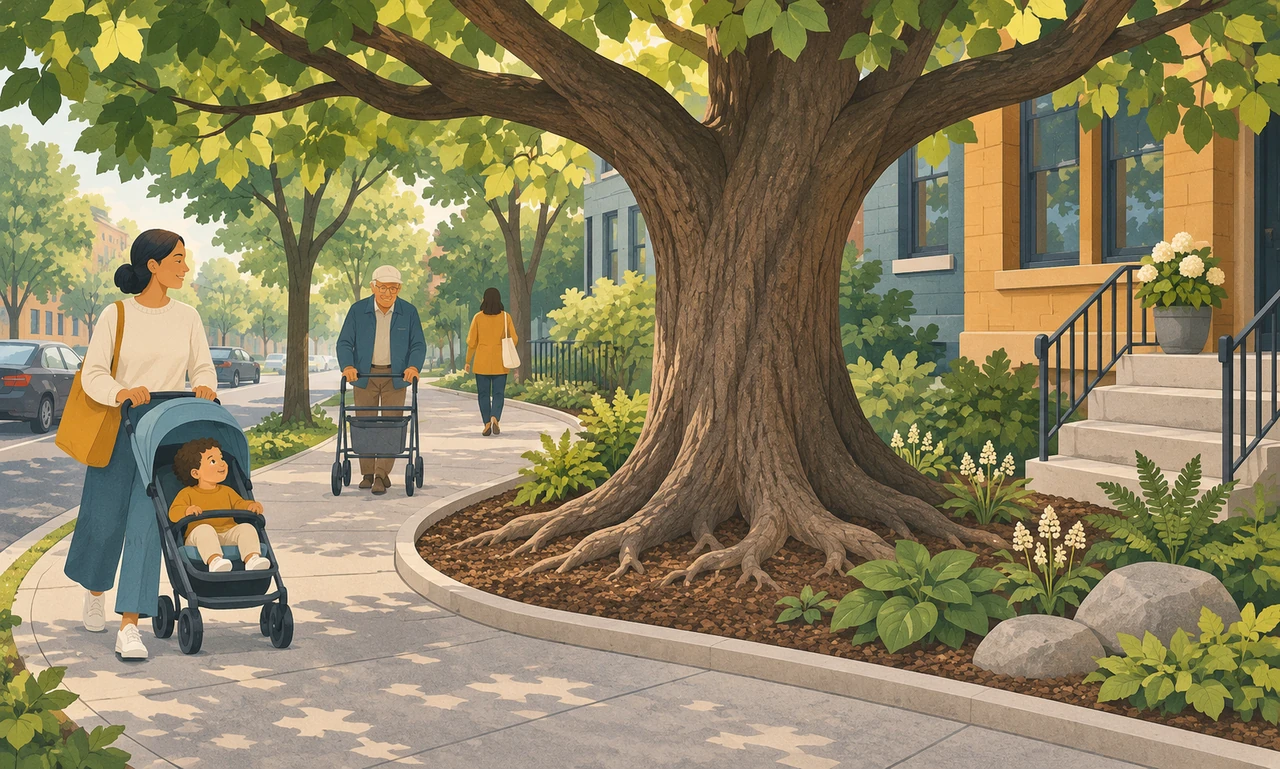
Stand at a respectful distance and look at the tree bed. Is the soil open or covered? Does the sidewalk bend around the trunk? Are there guards, grates or signs of recent maintenance? These details show how the living tree and the built street are being asked to share space.
Observation cannot diagnose the health or stability of a tree. Avoid digging, cutting roots, attaching objects or treating visible changes without authorization. Qualified local professionals should assess safety and care concerns.
Notice pressure from both directions
Roots grow while pavement is expected to remain level. People need a clear route while soil needs protection from repeated compaction. Water must reach the ground without turning the walking surface into a hazard. None of these needs disappears because another one is important.
Describe specific conditions instead of choosing a side too quickly. A lifted paving slab, a narrow passage or a damaged guard can be reported as seen. The appropriate response depends on the species, site, utilities, access requirements and local standards.
Temporary conditions matter too. Construction materials, parked bicycles, salt piles or event equipment can crowd the tree bed for a day and still have consequences. Treat the space around the trunk as working infrastructure, not an empty corner.
Value the relationship, not only the object
The tree contributes to the character of the street, but it is not separate from the systems around it. Curbs guide water, crews maintain branches, residents report problems and designers decide how much soil and walking space the block can provide.
If you report a concern, include the location, date and visible condition. For an immediate hazard, follow the relevant emergency or municipal guidance. Do not make technical claims that a brief observation cannot support.
Looking below the leaves changes the picture. A street tree is not simply planted beside the sidewalk; it shares the sidewalk’s limited space. The quality of that relationship appears slowly, in roots that can grow and routes that people can continue to use.
About this article
An original perspective from Everyday News. It offers practical ideas and perspective rather than firsthand reporting.