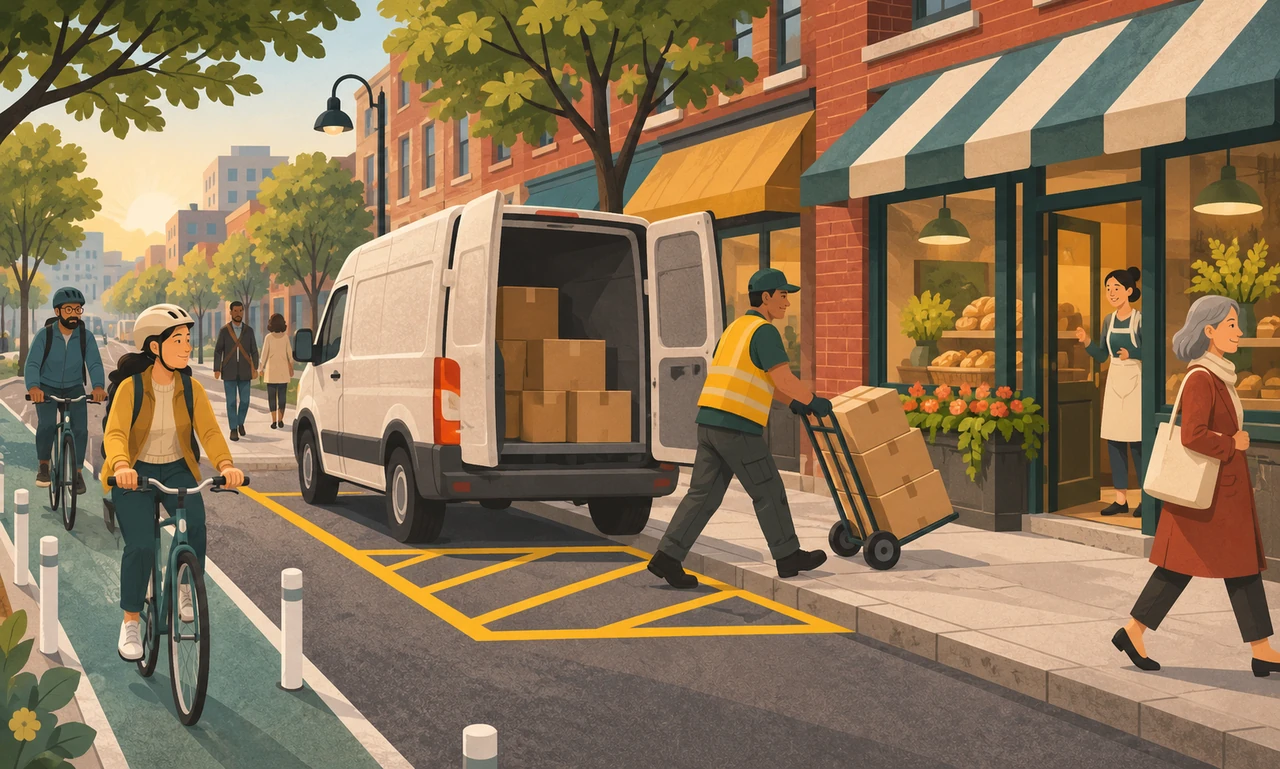
See the curb as a schedule
A loading zone may look empty between deliveries, but emptiness is part of how it works. The space has to be available when a van arrives, a hand cart comes down or a building needs a pickup that cannot happen from the middle of traffic.
Watch a familiar block from a safe public place. Notice how long a delivery takes, where the worker moves and which doors connect the curb to the destination. A few metres of street can link a warehouse route to a shop shelf or an apartment hallway.
Do not obstruct the work, enter a vehicle’s blind spot or photograph identifying details without a reason and permission. Follow posted parking and traffic rules rather than treating a quiet moment as evidence that the zone is unused.
Notice the space around the space
The loading zone does not end at its painted boundary. A cart needs a path across the sidewalk. Cyclists and drivers need predictable movement. Pedestrians need room to pass, and curb ramps, entrances and fire routes must remain clear.
Good coordination may look ordinary: hazard lights, a worker checking the route, goods stacked within reach and a vehicle leaving when the task is done. Difficulties become visible when boxes block a path, a door opens into traffic or a vehicle stops outside the designated area.
One observation cannot establish the full pattern. Delivery schedules, construction and local regulations change the block throughout the week. Date any notes and distinguish a single event from a repeated condition.
Recognize the work behind convenience
A parcel at a door or a product on a shelf is the end of a route most customers never see. The loading zone makes one part of that route public. It shows how much neighbourhood life depends on brief access to shared space.
If a condition creates a concern, report the exact location, time and visible issue through the responsible service or property manager. Avoid confronting workers or making assumptions about rules you have not checked.
The curb is often described as storage for parked vehicles. A loading zone reveals another role: the street as a place where work passes through. When that small workplace functions well, the block keeps moving and the delivery almost disappears into the day.
About this article
An original perspective from Everyday News. It offers practical ideas and perspective rather than firsthand reporting.